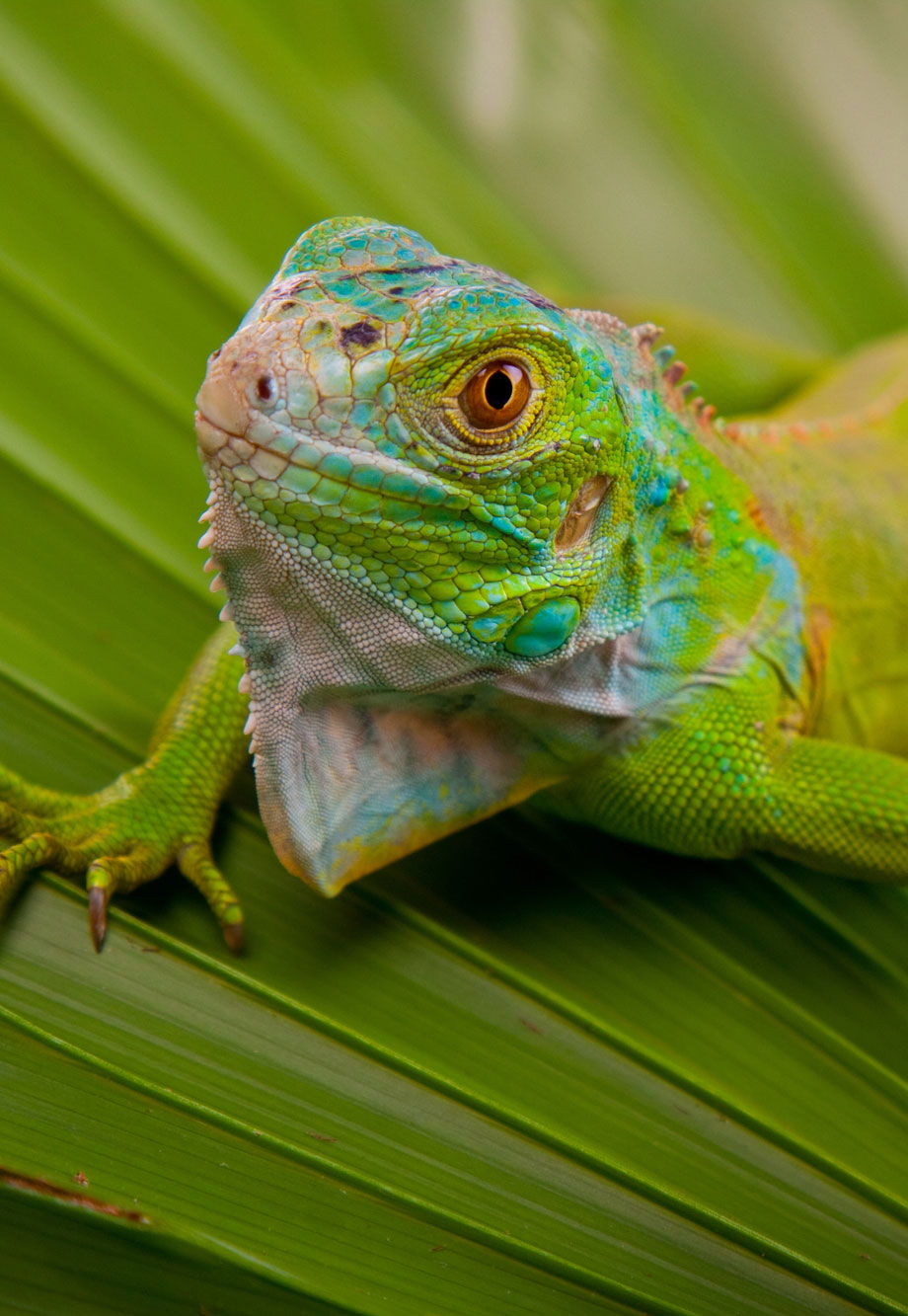

If you own a home in Coral Springs, FL, you have likely noticed the growing number of iguanas showing up in your yard, on your roof, and along canal banks throughout the neighborhood. South Florida's invasive iguana population has been expanding rapidly, and Broward County homeowners are increasingly dealing with the property damage, landscaping destruction, and structural risks these reptiles bring. At Guana Gone, we specialize in helping Coral Springs homeowners take back control of their properties with professional, humane iguana removal services. Here is everything you need to know about iguana season and how to prepare.
While iguanas are present in South Florida year-round, their activity levels follow a distinct seasonal pattern that directly affects how much impact they have on your property. Understanding this cycle is key to timing your prevention and removal efforts for maximum effectiveness.
Iguana activity begins ramping up in early spring as temperatures rise and daylight hours increase. By late spring, iguanas enter their breeding season, which typically runs from April through June. During this period, male iguanas become noticeably more territorial and aggressive, often displaying head-bobbing, color changes, and confrontational behavior. Females begin searching for suitable nesting sites where they can dig burrows and lay eggs, and residential properties in Coral Springs provide exactly the conditions they are looking for.
Summer represents peak iguana season in Coral Springs. The combination of warm temperatures, abundant vegetation, and active breeding means iguanas are at their most visible and most destructive during these months. A single female can lay anywhere from 20 to 70 eggs per clutch, and in South Florida's favorable climate, survival rates are high. This means that an iguana presence that seems manageable in the spring can quickly escalate into a full-scale population problem by mid-summer.
Activity remains high through fall before tapering off during the cooler winter months. However, even during winter, iguanas do not truly hibernate in South Florida. They become sluggish during cold snaps and may fall from trees when temperatures drop into the 40s, but they recover and resume activity as soon as temperatures climb back up. The only true relief comes during rare, sustained cold events, and even then, the population rebounds quickly.
Coral Springs sits in the heart of Broward County, where the subtropical climate, extensive canal systems, and lush residential landscaping create ideal habitat for green iguanas. Several factors specific to our area have contributed to the explosive growth of the iguana population in recent years.
South Florida's warm, humid environment mirrors the native tropical habitats where green iguanas originated in Central and South America. The year-round warmth means iguanas can remain active, feed, and reproduce throughout most of the year without the population-limiting cold winters that would naturally control their numbers in temperate regions. The abundant tropical and ornamental vegetation planted throughout Coral Springs neighborhoods provides a nearly unlimited food supply.
Coral Springs and the surrounding communities are laced with canals that serve as ideal travel corridors and habitat for iguanas. These waterways allow iguanas to move freely between neighborhoods, colonize new areas, and access food sources across a wide range. Canal banks also provide prime burrowing habitat, and the erosion caused by iguana burrows along seawalls and canal embankments is a growing concern for property owners and municipal infrastructure alike.
Many Coral Springs homeowners unknowingly create an iguana buffet with their landscaping choices. Iguanas feed heavily on flowering plants including hibiscus, roses, orchids, geraniums, and nasturtiums. They also consume fruit from mango, avocado, and berry-producing trees. Vegetable gardens are equally attractive targets. Properties with these plants essentially roll out a welcome mat for iguanas moving through the neighborhood.
Iguanas are far more than a visual nuisance. The damage they cause to residential and commercial properties in Coral Springs can be extensive and expensive to repair. Understanding the types of damage iguanas inflict can help you appreciate why proactive removal is so important.
Iguanas dig deep burrows for nesting and shelter, and they prefer to excavate along seawalls, under sidewalks, near building foundations, and around pool decks. These burrows can extend several feet underground and undermine the structural integrity of the surfaces above them. Over time, burrowing activity can cause sidewalks to crack and collapse, seawalls to shift and fail, and foundations to settle unevenly. The repair costs for this type of structural damage can run into thousands of dollars, and most homeowner insurance policies do not cover damage caused by invasive wildlife.
A single iguana can strip a flower bed or ornamental garden bare in a matter of days. They are voracious herbivores that target many of the most popular landscaping plants in South Florida. Homeowners who invest significant time and money in their gardens and landscaping often find their efforts destroyed overnight by foraging iguanas. Repeated feeding pressure can kill established plants and make it virtually impossible to maintain attractive landscaping without addressing the underlying iguana population.
Iguanas are excellent climbers and frequently access rooftops by scaling trees, fences, and exterior walls. Once on the roof, they seek shelter under solar panels, in soffit gaps, and through any opening that provides access to attic spaces. The roof provides two critical resources iguanas need: shelter from predators and warmth. An iguana living in your attic can cause damage to insulation, wiring, and roofing materials, and their droppings create unsanitary conditions that can affect indoor air quality.
Iguanas are drawn to swimming pools and frequently use them as a water source and bathroom. Iguana droppings in pools pose health concerns because they can carry salmonella bacteria. Pool decks, patios, and outdoor dining areas can also become contaminated, making outdoor living spaces unpleasant and potentially unhealthy for families with children and pets.
Before taking action against iguanas on your property, it is important to understand the legal framework in Florida. Green iguanas are classified as an invasive, non-native species by the Florida Fish and Wildlife Conservation Commission. They are not protected under Florida law except by anti-cruelty statutes, which means they can be humanely removed from private property with the landowner's permission at any time without a permit or hunting license.
However, there are important stipulations. All removal must be conducted humanely. Captured iguanas cannot be relocated or released at a different location in Florida. They must be dispatched humanely on site or retained. The FWC actively encourages homeowners to remove iguanas from their properties and has designated public lands in South Florida where removal is also permitted.
In January 2026, the FWC issued a special executive order during a cold weather event that temporarily allowed members of the public to collect live, cold-stunned green iguanas and bring them to designated FWC offices. This action underscores the state's recognition of the severity of the invasive iguana problem and its commitment to supporting removal efforts.
Taking proactive steps before iguana activity peaks in spring and summer can significantly reduce the impact these invasive reptiles have on your property. Here are the measures we recommend for Coral Springs homeowners.
Removing or reducing iguana-attracting plants is one of the most effective prevention strategies. While many homeowners resist this recommendation, eliminating or relocating hibiscus, roses, orchids, and fruit-bearing trees from areas near your home dramatically reduces the food sources that draw iguanas to your property. Consider replacing them with species that iguanas find less appealing, such as citrus, milkweed, or pentas.
Trim all shrubs and tree branches at least two feet back from your home and two feet below the roofline. This eliminates the climbing pathways iguanas use to access your roof. If you have solar panels, consider installing critter guards to prevent iguanas from nesting underneath them. Barrier fencing around gardens, pool areas, and vulnerable landscaping can also be effective at keeping iguanas out of specific zones.
Inspect your property for existing burrows along seawalls, under walkways, near foundations, and around pool decks. Filling abandoned burrows and installing underground barriers in areas prone to burrowing can prevent new excavation. Our team can assess your property and recommend specific solutions for your situation.
Remove fallen fruit from your yard promptly. Secure outdoor pet food and bird feeders. If possible, install pool covers when the pool is not in use. Reducing accessible food and water makes your property less attractive relative to neighboring areas.
Many Coral Springs homeowners attempt to handle iguana problems on their own, only to find that the population quickly returns. There are several reasons why professional removal consistently delivers better long-term results.
Iguanas are intelligent, territorial animals that learn to avoid simple traps and deterrents. They are also fast, agile, and capable swimmers that can escape capture easily. Professional removal teams have the experience, equipment, and techniques to effectively reduce iguana populations across your entire property, including canal banks and neighboring areas where iguanas may be staging.
We also understand iguana behavior patterns, including their daily movement routes, preferred basking spots, and seasonal nesting habits. This knowledge allows us to target removal efforts strategically rather than reactively. Our approach includes trapping, direct removal, nest and burrow elimination, and exclusion techniques that address both the current population and the conditions that attract new iguanas to your property.
We recommend beginning your preparation in late winter or early spring, before breeding season starts in April. This gives you time to modify landscaping, install barriers, and schedule professional assessment and removal services before iguana activity reaches its peak. However, because iguanas are active year-round in South Florida, removal services can be effective at any time of year.
While iguanas are generally not aggressive toward people or pets, they can bite, scratch, or whip their tails when cornered or handled. Their droppings can carry salmonella bacteria, which poses a health risk, particularly for young children and individuals with compromised immune systems. Iguana droppings on pool decks, patios, and in swimming pools are a common concern for Coral Springs families.
Iguana damage can accumulate surprisingly fast. A single female can lay 20 to 70 eggs per year, and South Florida's favorable climate means high survival rates for hatchlings. Landscaping damage can occur within days of iguanas establishing a presence on your property. Burrowing damage develops over weeks to months but can have serious structural consequences if left unaddressed. The longer an iguana population is allowed to establish itself, the more difficult and expensive removal and repair become.
Yes. Green iguanas are classified as an invasive species in Florida and are not protected except by anti-cruelty laws. They can be humanely removed from private property year-round without a permit or hunting license. However, captured iguanas cannot be relocated or released elsewhere in Florida. We ensure all removal is conducted humanely and in full compliance with Florida law and FWC guidelines.
Ignoring an iguana presence typically leads to rapid population growth and escalating damage. Iguanas are creatures of habit that return to the same feeding and nesting sites daily. Without intervention, a few iguanas can become a colony that causes extensive burrowing damage to seawalls and foundations, destroys landscaping, contaminates pool areas, and potentially gains access to your attic or roof structure. Most property insurance policies do not cover damage from invasive species, so homeowners bear the full cost of repairs.
Iguana season in Coral Springs, FL is approaching, and the time to prepare is now. Waiting until iguanas have established nesting sites, dug burrows along your seawall, and stripped your garden only makes the problem harder and more expensive to resolve. At Guana Gone, we bring specialized expertise in iguana behavior, humane removal techniques, and property protection strategies that deliver lasting results for Coral Springs homeowners.
Whether you are dealing with a few iguanas in your yard or a full-scale infestation along your canal bank, we are here to help. Contact us today to schedule a property assessment and learn how our professional iguana removal services can protect your Coral Springs home this season and beyond.

Copyright © Guana Gone 2025