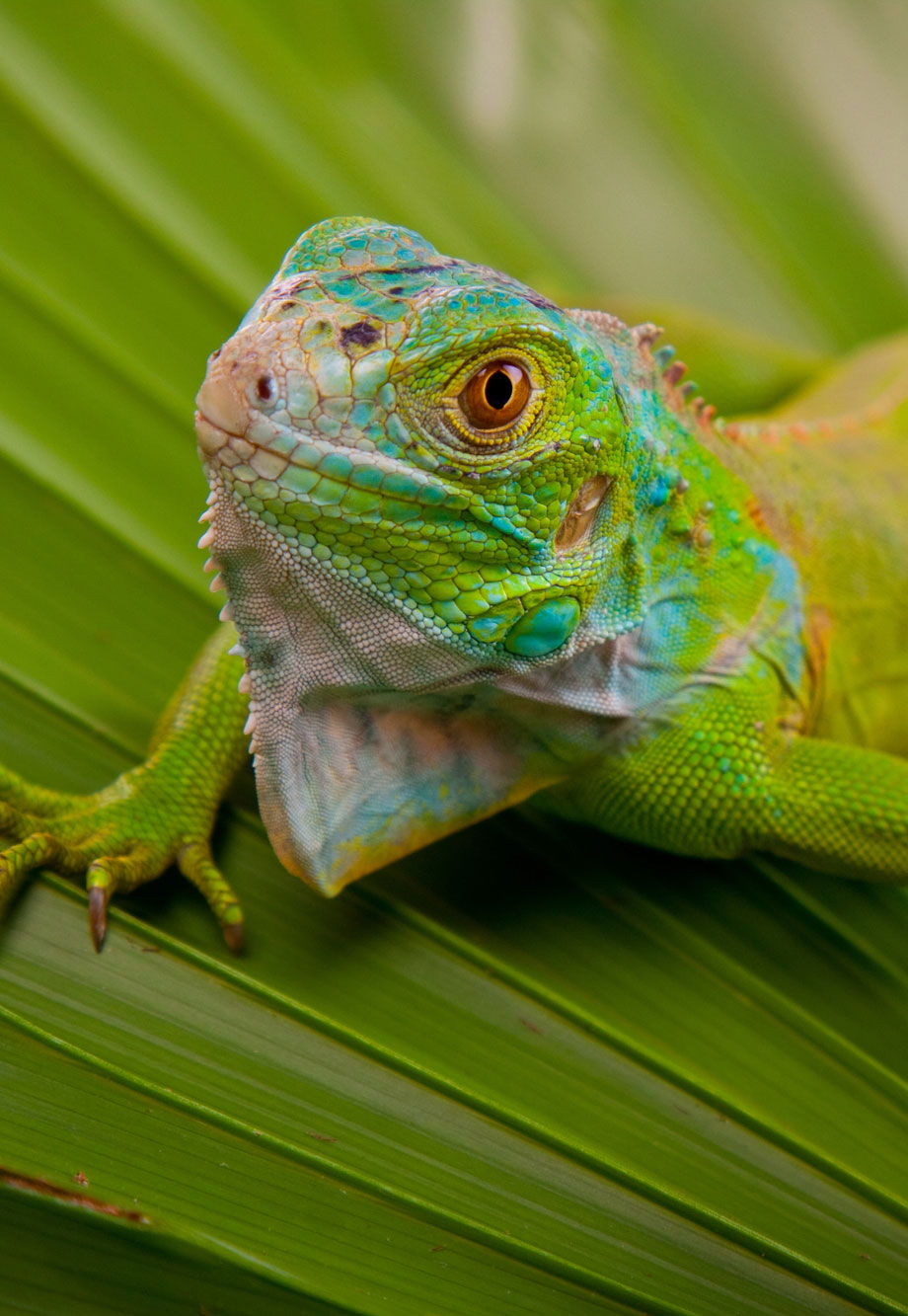

If you live or own property in Hollywood, FL, you already know the signs. Green iguanas sunning on seawalls. Burrow holes opening up near sidewalks and pool decks. Garden beds stripped bare overnight. Every spring, iguana activity surges across South Florida — and local neighborhoods are right in the thick of it. If you've been searching for iguana removal Hollywood FL, you're not alone, and you're not overreacting.
This city sits in the heart of Broward County, where the warm climate and dense canal systems create ideal iguana habitat. Green iguanas thrive here year-round, but spring triggers a noticeable spike. They move more, breed more, and cause more damage. By the time most property owners realize they have a serious problem, the damage is already done.
In this post, we'll explain why spring is the worst time for iguanas on your property, what kind of damage they cause, what Florida law actually says about removing them, and how Guana Gone handles iguana removal the right way — humanely, legally, and effectively.
Green iguanas are cold-blooded. Their behavior is driven almost entirely by temperature. During South Florida's cooler months, iguanas slow down. You might see them barely moving in trees or along fences. But once temperatures climb into the 80s and 90s — which happens right on schedule each spring — everything changes.
Spring is breeding season for iguanas. Males become territorial and aggressive. Females start digging burrows to lay eggs. According to the Florida Fish and Wildlife Conservation Commission (FWC), a single female can lay up to 75 eggs in one clutch. Those eggs hatch in late summer, releasing dozens of juveniles. The population compounds fast.
The canal-heavy layout of many Broward neighborhoods gives iguanas easy travel routes. They swim between properties along the Intracoastal and inland waterways. Mature fruit trees — mango, avocado, bougainvillea — are magnets for feeding adults. The more greenery and open water nearby, the worse the seasonal surge becomes.
We see it every year. Call volume spikes from March through June. Properties that seemed manageable over the winter suddenly have multiple iguanas competing for space. Acting early gives you a real advantage before population pressure gets out of hand.
Iguanas are not just an eyesore. They cause real, measurable damage to homes and commercial properties throughout Broward County. Understanding that damage helps explain why professional iguana control in South Florida is taken seriously by property managers, HOAs, and homeowners alike.
Burrowing is one of the most serious concerns. Iguanas dig deep burrows — sometimes extending six feet or more — in seawalls, embankments, and landscape berms. These burrows destabilize structures over time. In South Florida, where many properties are built on fill near water, this structural undermining can become expensive fast. Seawall repair costs regularly run into the tens of thousands of dollars.
Landscaping damage is constant. Iguanas eat flowering plants, vegetable gardens, ornamental shrubs, and fruit trees. Hibiscus, orchids, and roses are particular favorites. One large adult can strip a garden bed overnight. Pool areas are another hotspot — iguanas are attracted to pool decks for warmth and will frequently defecate in and around the water. Iguana feces contain Salmonella bacteria, which poses a genuine health concern for households with children or elderly residents.
Additional damage we commonly document on South Florida properties includes:
A persistent iguana presence creates health and liability risks. The primary health concern is Salmonella. Iguanas shed this bacterium through feces, and contamination spreads to surfaces, water features, and soil. Children, pets, and anyone handling contaminated areas without precautions can be exposed.
Iguanas can also bite and scratch when cornered. An adult iguana has a powerful jaw and sharp claws. Territorial males during breeding season are especially aggressive. Attempting to handle or trap iguanas without training and proper equipment carries real risk of injury.
Liability is a growing concern for HOAs and commercial properties. If burrowing damage affects a neighboring property, or a guest is injured, you may face questions about whether reasonable steps were taken. Documenting that you engaged a licensed professional creates a clear record of due diligence. For business owners, iguana activity near outdoor dining or storefronts is also a reputation issue. Our commercial removal services address these concerns efficiently and discreetly.
This is one of the most common questions we receive, and the answer matters. Florida law around iguanas is specific, and misunderstanding it can lead to legal problems.
Green iguanas are classified as an invasive, nonnative species by the Florida Fish and Wildlife Conservation Commission. They have no protected status under Florida law. Property owners may remove iguanas from their own property without a permit. However, a critical restriction applies: iguanas cannot be relocated. Under FWC guidelines, removed iguanas must be humanely euthanized — not released elsewhere.
This is where many DIY attempts run into trouble. Trapping an iguana and releasing it in a nearby park is illegal in Florida. It also doesn't solve the problem — iguanas can return to familiar territory or become someone else's problem.
Licensed wildlife removal professionals are authorized to remove iguanas from any property and handle disposal in full compliance with FWC requirements. Our team at Guana Gone follows all state guidelines on every job. When you hire us, you're not just getting effective removal — you're getting removal that's fully legal and properly documented.
For local property owners, this matters. Nuisance iguana removal in Broward County must follow state law, and working with a licensed professional is the only way to ensure full compliance.
We understand that many property owners want to try something themselves before calling a professional. That's reasonable. Here's an honest assessment of what actually works and what doesn't.
What has some effect:
What doesn't work reliably:
The honest truth is that deterrents can reduce iguana pressure slightly, but they don't solve an established iguana problem. Once iguanas have set up burrows on your property and identified it as a reliable food and shelter source, they are not going to leave on their own. Deterrents work best as a supplement to professional removal — not as a replacement.
If you're seeing multiple iguanas regularly, or you've found burrow holes, deterrents alone won't solve it. What you need is professional iguana trapping and removal.
When our team arrives at your property, we follow a structured process designed to produce lasting results — not just temporary relief. Learn more about everything we do at Guana Gone's website.
We start with a thorough property assessment. Our technicians walk the entire property, identifying active burrows, feeding areas, entry points, and attractants. This gives us a complete picture before any trapping begins. We also check for signs of nesting activity, since spring often means egg-laying is already underway.
Our trapping methods are humane and fully compliant with FWC guidelines. We use live traps placed strategically based on observed iguana movement patterns. All removed animals are handled and euthanized in accordance with state law. We do not release iguanas elsewhere — ever.
After removal, we provide cleanup and decontamination where needed. Burrows are backfilled and treated. Fecal matter in pool areas or on surfaces is cleaned up properly to eliminate health risks. We document everything, which is especially important for HOA and commercial clients who need records for liability purposes.
We proudly serve Hollywood, FL and all of Broward County, including Fort Lauderdale, Pompano Beach, Deerfield Beach, Coral Springs, Plantation, Davie, Weston, and Sunrise. Iguana removal Hollywood FL is not a sideline for us — it's core to what we do every day.
Removal gets rid of the animals currently on your property. But without structural exclusion work, new iguanas will find the same attractive features that drew the first ones in. Long-term iguana management requires a prevention strategy.
Barrier fencing is one of the most effective tools available. Properly installed iguana-specific fencing around garden beds, pool equipment areas, and landscaped zones keeps iguanas out of where they cause the most damage. Our barrier fencing and wildlife exclusion services are designed for South Florida conditions — accounting for soil type, climate, and iguana behavior.
Tree wrapping is another effective measure. Smooth metal or plastic wrap around tree trunks prevents iguanas from climbing to feed on fruit and foliage — especially useful for mango, avocado, and ornamental trees.
We also advise on longer-term landscape adjustments that reduce iguana attractiveness over time — including plant selection, hardscape choices, and irrigation practices that don't inadvertently create ideal iguana habitat. Combined with initial removal and ongoing monitoring, this approach produces the most durable results for property owners dealing with recurring iguana pressure.
The most effective approach is professional removal combined with exclusion work. Property owners can legally remove iguanas from their own land, but Florida law prohibits releasing them elsewhere. A licensed wildlife removal company like Guana Gone handles trapping, legal disposal, and follow-up exclusion in full compliance with FWC guidelines.
No. Green iguanas are classified as an invasive species by the Florida Fish and Wildlife Conservation Commission and have no protected status under Florida law. Property owners may remove them without a permit, but removed iguanas must be humanely euthanized — they cannot be relocated or released in another area.
Spring warming triggers peak iguana activity. Breeding season begins, females start burrowing to lay eggs, and males become more territorial and mobile. The canal-heavy neighborhoods and abundant tropical landscaping in the area make properties especially attractive. Population pressure increases significantly from March through June each year.
Yes — especially with an established iguana presence. DIY deterrents help slightly, but professional trapping is the only reliable way to remove iguanas once they've settled in. Combined with exclusion work, it provides lasting protection for your landscaping, structures, and pool areas.
Yes. Iguana burrows can extend six feet or more into embankments and seawalls, causing structural instability over time. This is one of the most costly forms of iguana damage in South Florida. Early intervention through professional iguana removal is far less expensive than seawall repair.
Spring iguana season is well underway across South Florida. The longer a population goes unaddressed, the more entrenched it becomes — and the more damage accumulates. Burrows deepen. Egg clutches hatch. New animals move in to fill the space left by others.
We specialize in iguana removal Hollywood FL property owners can count on. Our team is licensed, experienced, and fully compliant with Florida wildlife law. We've helped homeowners, HOAs, and commercial property managers across Broward County reclaim their properties — and keep them that way.
Don't wait until the damage gets worse. Contact us today for a property assessment and get your property iguana-free this season.

Copyright © Guana Gone 2025